Ether

Genre: Sound Game

A short production time.

The very short production time (2 months) forced me to be efficient with the code, because I wouldn’t have time to do a big rewrite if changes in the game design had to be made.

As such, at the very start of the project, I outlined the major components of our game:

  • Entities with a lot of complex logic to handle.
  • A freeform construction system that needs to be 100% reliable.
  • Easy-to-iterate procedural generation.

So, I chose an architecture inspired by modular pipelines: atomically made snippets of logic that call each other in chains with as few inputs and outputs as possible.
Build System, not mechanics.

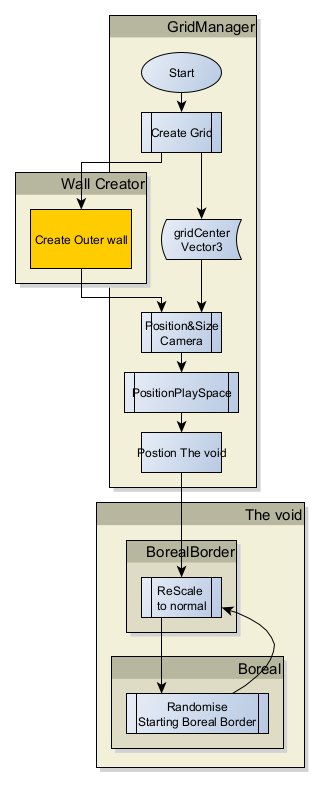
The first thing done was creating the play space.

But building it by hand every time we wanted to try a size would have been a loss of valuable time.

This script is responsible for the procedural instantiation of a grid and all the game components that require the context of the grid.

Grid Manager

Sculpt System

Second was the only system that needed to be rewritten from its original form—note that the vast majority of methods were already written.

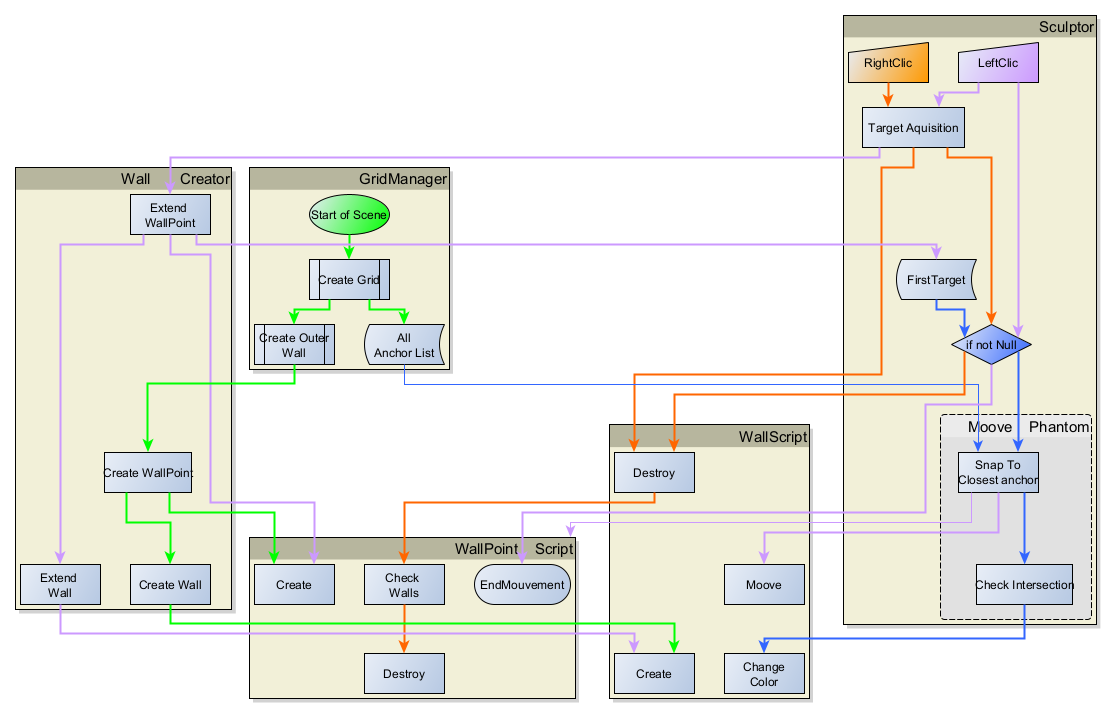
This system is a group of different pipelines responsible for making and destroying walls.

To make it scalable in the long term, the wall creator was written from the get-go as a library of modular methods for each little operation that our walls could carry out.

When the Sculptor script was rewritten, the only thing that truly changed was the logic of when and how to call the generic WallCreator methods.

This flexibility, created by forward planning in code, allowed us to rework one of our core mechanics in less than an afternoon, freeing up resources to improve other aspects.

Sculpt System